
How streaming has changed the way we consume content
Watching series, movies, and documentaries remotely from a smartphone, a laptop, or an XL-sized Smart TV that has little to envy from a cinema screen. The streaming era is here to stay. This model has completely changed the way audiovisual content is consumed and has opened up a wide range of possibilities for companies, brands, and users. Here, everyone seems to win…
Spain is one of the main European countries where there has been a higher penetration of streaming services. So much so that around 73% of consumers are subscribed to at least one service per month. This is reflected in the study Global Consumer Survey 2024: Media and Entertainment, which analyzes media and entertainment consumption trends and provides figures that invite reflection.
This trend arrived to stay in 2015, when Netflix took its first steps. Later came Max —formerly HBO— and Prime Video, followed by others such as Disney+ or Filmin. This article explains how streaming works, what the key aspects of this service are, and how it has influenced content consumption, relegating traditional television to very specific age groups.
What is streaming?
The word ‘streaming’ comes from the term ‘stream’, which means ‘flow, current’. The concept thus refers to a continuous transmission of data and information, which allows a user to watch content over the internet without having to download it completely to their device.
Consumers can view it through different devices, connecting to the internet. There are options to watch live broadcasts or on-demand content, already recorded and loaded in small data packets without needing to download the entire file to the device where it is being played.
How does streaming work?
To better understand what the streaming service is and how it works, nothing better than structuring the step-by-step process of how streaming works:
- On one hand, there are platforms with content produced for internet broadcasting. Some of this content is live, while other content is already available on demand.
- On the other hand, there are users, anonymous individuals who connect to consume these products through different devices, whether smart TVs or electronic devices such as mobile phones, laptops, or tablets, among others.
- It is essential to have an internet connection.
- Once the consumer accesses a specific product, such as a series or a movie, it is played thanks to the structured delivery of data packets, meaning there is no need to download the full file to the device being used.
There are increasingly more streaming platforms available. Alongside popular platforms such as Netflix, Amazon Video, Max, or Disney+, others launched by different production companies and TV networks include Atresplayer, Mediaset, and RTVE, all three based in Spain.
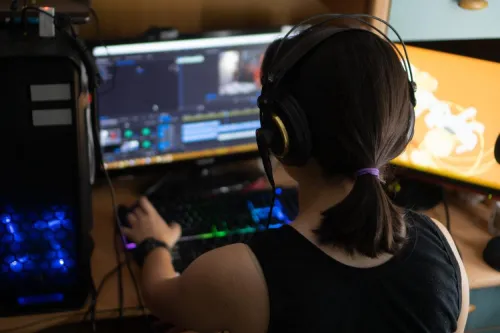
Main types of streaming
Currently, there are several types of streaming. Although it is often generalized into two categories, there are actually three different options:
- Real-time streaming: live broadcasts, which require powerful servers capable of sending images simultaneously as the event occurs. Sports events, concerts, conferences, and lectures are streamed in this way.
- Delayed streaming: events that were broadcast live can be watched later, as they are recorded and played back in the same way as content produced specifically for streaming platforms.
- Pre-produced streaming content: series, movies, documentaries, and TV programs that can be watched after their broadcast on traditional television.
Considering these options, and mentioning some of the companies above, the number of platforms investing in these services continues to grow. Alongside Netflix, Max, and Amazon Prime, others include Apple TV, Rakuten, Filmin, YouTube, DAZN, Facebook Live, Spotify, LiveStream… and many more, with new projects constantly emerging.
This is generating numerous professional opportunities in fields related to the artistic world and audiovisual production, as well as marketing and communication. Companies operating in the streaming content sector invest millions every year to create products that reach users and become among the most-watched of the season.
How are streaming platforms changing content consumption?
The emergence of streaming platforms has represented a true revolution among viewers. Although traditional television still shows linear consumption, there has been a significant increase in the penetration of these services in Spanish households. Data confirms this: according to the Household Panel of the Spanish National Commission on Markets and Competition (CNMC), in 2021, 55% of households used platforms such as Netflix or Prime Video. In 2024, this figure reached 64.2%.
This growth is due to several factors that have transformed audiovisual consumption:
- On-demand consumption: watch what you want, when you want, in your free time, with the option to pause whenever needed.
- Unlimited access: although some content requires extra payment, platform catalogs include such a large amount of content that users are never short of options or new releases.
- Viewing freedom: it is possible to access content anywhere in the world with just an internet connection and a device.
- Content personalization: artificial intelligence applied to these platforms allows recommendations tailored to viewers’ profiles, increasing engagement and views.
The entertainment and audiovisual leisure industry is experiencing a golden age. Numerous professional profiles are emerging and gaining relevance in this sector, and companies need people with specialized training. Among the constantly in-demand jobs in streaming are roles capable of analyzing user behavior. To train in this field, academic programs such as the Master’s in Consumer Psychology and Behavior at EAE Barcelona stand out.
Another area of interest is advertising and marketing. In this case, the school offers the Master’s in Digital Marketing & Growth Hacking, designed for those who want to specialize in this sector.
Related Programs

Master in Digital Marketing & Growth Hacking
Marketing, Communication & SalesThe EAE Barcelona Master in Digital Marketing & Growth Hacking is an innovative and powerful...
- Multiples Modalities
