




The Impact of Sustainable Fashion on Consumer Behavior
Consumers are becoming increasingly aware of the impact that the fashion industry has on the environment. As a result, more people are seeking information about sustainable fashion and the values it represents.
The fashion industry produces more than 1,000 megatons of carbon dioxide equivalent emissions each year, making it the second most polluting industry in the world, according to Statista. In response, more strategies are being implemented to promote a sector that prioritizes sustainability and environmental responsibility, which also involves raising consumer awareness.
How have consumers reacted to the consequences of fast and mass clothing consumption? Is the reality of overproduction and its environmental impact influencing how people buy? Below, we explore how sustainable fashion is evolving and shaping consumer behavior.
What is sustainable fashion?
Sustainable fashion is both a movement and a production approach that aims to reduce the environmental and social impact of the textile industry. Its main goals are:
- Reduce pollution
- Optimize resource use to minimize environmental impact
- Eliminate unfair working conditions in garment production
Sustainable fashion is based on principles such as the use of eco-friendly materials, reducing water and energy consumption, recycling, reusing textiles, and promoting fair and responsible trade.
This approach contrasts with conventional fashion, which is often characterized by mass production, intensive use of chemicals, and excessive consumption of natural resources. Fast fashion has been widely criticized for its negative impact on both the environment and labor conditions. In response, sustainable fashion emerges as a more ethical and environmentally responsible alternative.
Sustainable fashion trends
Sustainable fashion trends have evolved significantly in recent years. While many changes have taken place, three key trends stand out and are expected to continue growing:
- The use of recycled and organic materials, such as organic cotton, linen, tencel, and recycled polyester. These reduce dependence on non-renewable resources and minimize waste.
- The rise of the circular economy, which promotes recycling and reusing garments instead of discarding them. This includes business models such as second-hand resale, clothing rental, and textile recycling programs led by major brands.
- Brands committed to sustainable fashion are adopting practices of transparency and traceability in their supply chains. Consumers can track the origin of materials and understand production conditions, increasing trust and accountability.
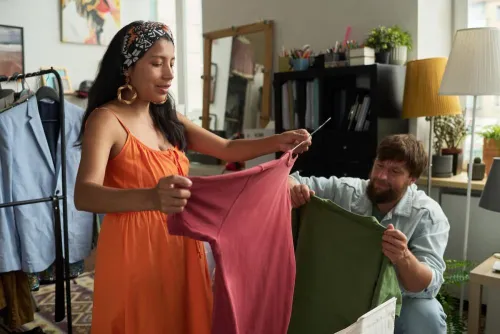
Sustainable fashion design
Sustainable fashion design involves a conscious and strategic approach to reducing the environmental impact of clothing. How is this being achieved? Several established practices show that change is already underway:
- Eco design: considers the full lifecycle of a garment, from material selection to recyclability at the end of its use.
- Local and artisanal production: many sustainable brands produce in small workshops with fair working conditions and lower waste generation.
- Modular and versatile designs: allow consumers to wear the same garment in different ways, extending its lifespan and reducing the need for constant purchasing.
- Innovative technologies: tools such as 3D printing, biodegradable textiles, and natural dyes are transforming the industry, offering more environmentally friendly alternatives without compromising quality or style.
Topics such as sustainability and responsible fashion are explored in the Master in Fashion & Retail Management at EAE Barcelona. It is essential to train professionals who understand the industry’s environmental impact and know how to align sustainability with business success.
Advantages of sustainable fashion
While this article has already touched on the topic, it is important to highlight the key benefits of a more sustainable and responsible fashion industry:
- Significantly reduces environmental impact by lowering the use of water, energy, and toxic chemicals, helping to fight climate change and protect ecosystems.
- From a social perspective, sustainable fashion supports fair labor practices, ensuring safe working conditions and fair wages.
- For consumers, it offers higher quality and more durable products. Although sustainable clothing may have a higher initial cost, it tends to be more cost-effective over time.
- The growth of sustainable fashion has increased consumer awareness, encouraging more responsible purchasing habits and a more conscious relationship with clothing.
In conclusion, sustainable fashion is reshaping consumer behavior by offering more ethical and environmentally friendly alternatives. As demand for responsible products continues to grow, sustainable fashion is likely to strengthen its position as a standard within the industry.
Data supports this trend. According to a Capgemini study, 67 percent of consumers would switch brands due to a lack of sustainability. More insights can be found in the report What Matters to Today’s Consumer.
