



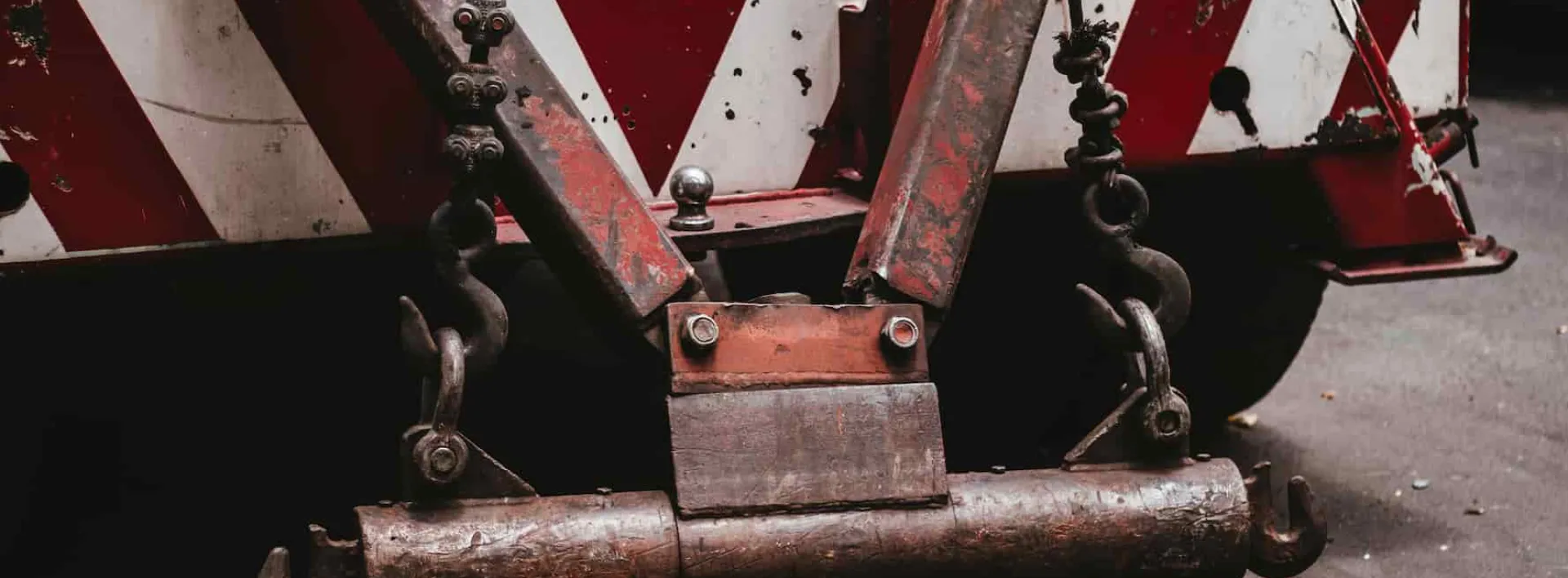
What is a hoist and what is it used for in logistics?
The logistics sector requires trained professionals who are familiar with tools that can streamline their work. The hoist is one of them, and here we explain why it has become an essential system for increasing productivity in the transport industry and the supply chain.
Hoists are systems designed for moving and lifting loads and have become essential equipment in the world of logistics. Hoists, the machinery we will explore in greater detail in this article, have countless applications and are becoming increasingly important in today's environment. In a globalized world where borders have become less significant and e-commerce has driven transport by land, sea and air, having technologies and tools that make it possible to organize and streamline the movement of goods is essential.
For this reason, depending on the sector in which you develop your career, it is particularly important to understand what hoists are, how they work and what they contribute to the transport and logistics industry. This sector generated around €16 billion in 2022, and PwC forecasts indicate that it will exceed €19 billion by 2026.
What is a hoist?
As mentioned above, hoists are pieces of equipment designed to move objects and packages, usually heavy loads, within warehouses and large storage facilities, as well as workshops, factories and production centers. The function of a hoist is therefore to load and unload materials that require highly specialized machinery in order to distribute them efficiently and safely. These systems stand out because they offer operators an ergonomic way of working, although their use requires appropriate training and a certain level of experience.
This system offers several advantages. Considering the applications of hoists, the following factors can be highlighted as some of their main benefits:
- High load capacity. Hoists can move very heavy loads and are used when a warehouse worker alone or conventional material-handling equipment is not sufficient.
- Highly safe system. Firstly, depending on the machine being used, hoists generally have a maximum load capacity, meaning that they cannot move just any load. In addition, a key aspect of how a hoist works is that it is equipped with emergency brakes and precise motion controls to position the load correctly.
The aim is to ensure both the safety of the workers and that of the object or objects being handled.
- Maximizes company productivity. By streamlining these processes, companies save time and resources, while workflows can maintain an optimal pace that improves the profitability of operations.
- Compact equipment that can adapt to the dimensions of virtually any space. This makes this machinery accessible regardless of the type of hoist involved—which we will examine below—and means it can be used both by large warehouses and by smaller operators with more modest facilities.
How does a hoist work?
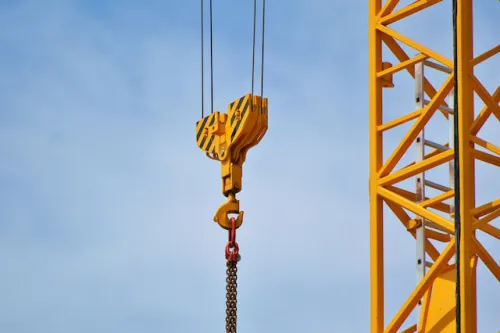
The RAE defines it as a “system consisting of two sets of pulleys, one fixed and one movable”, which essentially summarizes how a hoist works. The system consists of fixed pulleys and movable pulleys. The latter move along rails and use a single rope.
The movable pulley is responsible for moving the load forwards, backwards or sideways, in a specific direction that is programmed in advance through the technology supporting the different types of hoists. The fixed pulley, meanwhile, changes the direction of the force in order to raise or lower the load according to the operator's requirements.
The third component of this system, which is widely used in logistics and transport, is the rope, which transmits force between the pulleys. Its length and strength, as well as its thickness and overall quality, depend directly on the number of movable pulleys being used. The greater the number of pulleys, the more suitable the hoist will be for large facilities and/or companies handling a wide range of heavy loads.
Types of hoists
Once we understand how a hoist works, it is easy to see that there are many different types. The specific type depends on the configuration of the system and how components are added or removed—for example, by increasing or reducing the number of movable pulleys. In any case, it is useful to know that the different types of hoists can be classified according to certain characteristics:
- Number of movable pulleys. The greater the number of movable pulleys, the greater the mechanical advantage and the more demanding the applications the system can handle. Increasing the number of movable pulleys in a system of this kind multiplies the force that can be applied.
- Number of pulley grooves. In logistics and when discussing hoists, the groove refers to the channel in the pulley that comes into direct contact with the chain or cable. It plays an important role in the stability of the system. If there is only one groove, it is known as a single hoist, while systems with more than one are referred to as double hoists.
- Manufacturing materials. The lifting lines can be made and installed using cables, chains or ropes.
- Operating mechanism. There are three main options: manual, where the lifting force is provided by the person operating the equipment; electric, which uses an electric control system, as the name suggests; and chain-operated, which uses a double structure for moving and guiding loads and makes it possible to handle particularly heavy loads from a control cabin at a certain distance.
Applications of hoists
Having examined how hoists work, the tasks they perform and the different types of hoists available on the market, it is useful to understand their real-world applications in the logistics and transport sector.
These systems for handling particularly heavy and/or large loads are commonly used in mechanical workshops and warehouses, airports, seaports and dry ports, production centers and the metalworking industry, among others.
This equipment therefore plays a fundamental role in supply chains and large industries. Its operation is covered in highly specialized training programs related to these fields, such as the Master in Supply Chain Management & Logistics. In postgraduate programs of this kind, it is essential to study mechanisms such as hoists and their applications in production, logistics and distribution processes, among others.
At EAE Business School Barcelona, we aim to provide students with all the tools they may need when taking on specific roles within a company or organization. Without a doubt, the applications of hoists make this equipment an important resource both in transport and logistics and for professionals managing projects in certain industries. For this reason, professionals interested in moving into management positions can also encounter this content in programs such as the Master in Project Management, as the aim is to equip professionals to manage, organize and control complex projects from a global perspective.
