




Hague Apostille: What It Is, What It Is Used For and How to Apply for It
The Hague Apostille is an official procedure that allows a public document to be legally recognised in another country that is a signatory to the international convention, without requiring additional diplomatic legalisation.
In Spain, this system is applied under the Hague Convention of 5 October 1961 Abolishing the Requirement of Legalisation for Foreign Public Documents, which was incorporated into Spanish law and has been in force since 1978. The apostille certifies the authenticity of the signature, the capacity in which the signatory acted and the identity of the seal or stamp on the document.
This mechanism is commonly used for academic, professional and administrative procedures related to studying abroad, international career mobility or residency processes in other countries.
What is it used for if you are studying in or moving to Spain?
The Hague Apostille allows academic and personal documents to be legally recognised in another country. In the educational field, it is frequently required for degree recognition, university admissions and enrolment in postgraduate programmes.
When planning an international academic experience, administrative procedures such as document legalisation play an important role when comparing the best countries to study abroad, as the ease of validating certificates and qualifications can affect admission deadlines and visa processes. In internationally oriented programmes, such as the Master in Project Management, submitting apostilled academic documents helps verify qualifications obtained outside the destination country.
From an administrative and professional perspective, the apostille is also required for residency procedures, nationality applications and access to employment. The foreign resident population in Spain exceeds 6.9 million people, according to provisional data from the Continuous Population Statistics as of 1 April 2025, which helps explain the high demand for the validation of civil and academic certificates.
How can you apply for it?
The Hague Apostille in Spain can be requested online, in person or by post, depending on the type of document. The online Hague Apostille service is available for administrative documents that include an electronic signature and secure verification code, allowing the procedure to be completed through digital identification systems recognised by public authorities.
When a document contains a handwritten signature, the process requires submitting the original document to the relevant authority or sending it by post. In some cases, prior signature verification may be required if the issuer is not included in official records, particularly for academic or notarial documents.
Where can you obtain the Hague Apostille in Spain?
The competent authority for issuing an apostille depends on the type of document. Judicial documents are processed by the High Court of Justice of the relevant autonomous community. Administrative documents and civil registry certificates are managed through the Ministry of Justice, either through its central office or territorial offices.
Notarial documents, such as deeds, powers of attorney or certificates, are apostilled through the Notarial Associations in each jurisdiction. Correctly identifying the type of document is essential to avoid mistakes and delays in the process.
How much does an apostille cost?
The cost of the Hague Apostille in Spain varies depending on the organisation handling the procedure. Judicial documents and civil registry certificates processed directly by public authorities are generally apostilled free of charge or involve a reduced administrative fee. However, notarial documents are subject to regulated fees.
In 2025, the usual cost of a notarial apostille ranges between €25 and €65, depending on the urgency of the service. Additional costs may apply, such as sworn translation fees, which are required when the destination country does not accept documents in Spanish.
Which documents can be apostilled?
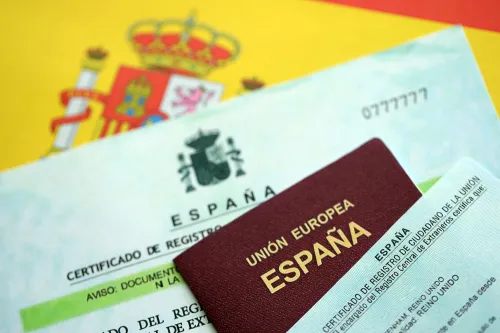
The Hague Apostille applies exclusively to public documents. The most common examples include judicial documents, administrative documents, civil registry certificates and notarial documents. Official certifications attached to private documents, such as the notarial authentication of signatures, may also be apostilled.
Diplomatic and consular documents are excluded from the procedure, as are documents directly related to commercial or customs operations. In the academic field, official degrees are apostilled as administrative documents, while non-official qualifications may require prior notarial authentication.
Which countries accept the Hague Apostille?
The apostille is only valid in countries that are signatories to the Hague Convention. Spain shares this legal framework with most countries in:
- The European Union
- Latin America
- North America
- Numerous economies in Asia and Oceania
Before starting the process, it is essential to check whether the destination country is part of the convention. If it is not, the traditional diplomatic legalisation process will be required instead. The gradual implementation of electronic apostilles in many countries has made the international validation of academic and professional documents easier.
The Hague Apostille is a key instrument for validating public documents in international contexts. Understanding what it is, how to apply for it, where to process it and which countries accept it helps individuals plan their studies, professional projects and administrative procedures abroad with greater legal certainty and fewer complications.
Related Programs

Master in International Business STEM
Business ManagementWe have created an innovative business management and international business programme...
- Full Time
- October 2026

Global MBA
MBAsThe Global MBA gives you a global vision of the different markets and allows you to develop...
- Hybrid Learning
- October 2026
