

Freemium model, another way to monetize a business
In the digital economy, we very often use products or services for free. This is because such products or services are based on a freemium model. The reality is a bit more complex, since in economics nothing is truly free. Companies, in fact, manage to make money even when they appear to offer part of their services for free. Let’s try to understand how.
What is the freemium model?
The freemium model is a business model that offers two or more versions of the product at different prices. The company provides a basic version of the product for free, while access to other versions (called “premium”), which include additional features, requires the user to pay a fee. In this way, the business is able to reach all interested customers while also generating revenue from more demanding users.
In a way, the freemium basic version acts as a hook product, since the company thereby builds loyalty and acquires a critical mass of users who can later be converted into paying customers, or whose presence can otherwise be leveraged to generate income in other ways.
How does the freemium model work?
Clearly, the freemium model is effective if the nature of the good and production technology allow control over the consumption of the premium version. If the company cannot prevent some consumers from using the product without paying, its paid demand becomes unreliable, and this may affect the economic sustainability of the entire project.
Consider the case of Adobe Acrobat Reader, the most widely used software for reading PDF files. Reader is free and can be easily downloaded from the company’s website and is already installed on many computers. In contrast, Adobe Acrobat Pro, the full package that allows not only reading PDFs but also creating them, costs around €290. What is the issue? The problem is that, except for companies subject to controls, individual users can easily avoid paying by illegally downloading the premium package. That is why the price is so high: Adobe charges the cost of the product mainly to legal customers.
The freemium model performs best in sectors where consumers cannot easily avoid paying for the premium service. Successful examples include WordPress, iCloud, Dropbox, and Flickr. WordPress is a hosting platform where anyone can register and start a blog for free; however, if they want a more customizable and professional space, they must purchase a domain. Dropbox and iCloud are services that offer a fixed amount of online storage. If users fill up their storage and want more, they can upgrade through a subscription. Flickr is one of the earliest photo-sharing platforms and one of the most popular: it offers a free solution with limited features and a paid full package that guarantees unlimited access and storage.
The huge user base reached by freemium free versions enables significant economies of scale and therefore very low average costs: this makes revenues from premium users more than enough to cover expenses. In the digital era, this is a very important business model and part of the knowledge that every manager should have, also taught in executive training programs such as the Executive MBA.
Advantages and disadvantages of the freemium plan
As we have seen, a freemium plan has many advantages, both for companies and users. For users, the main and obvious benefit is being able to use a service for free without any obligation to buy anything.
From the company’s perspective, this allows them to attract a large number of users who generate traffic, word-of-mouth, and data acquisition. However, many companies make the mistake of offering too many features in the free version, which can limit the profitability of the premium version, as users may never feel the need to upgrade. This can create an economic problem, since infrastructure costs are not covered by revenue from paying customers.
Finally, the freemium model allows companies to launch products or innovations to a potentially huge audience, enabling very effective market testing before potentially converting the same product or service into a paid offering. Users, on the other hand, can test a product or service for free for a certain period and experience its potential firsthand before deciding whether to buy it. A winning strategy for both users and companies.
Examples of freemium products
Among examples of the freemium model are all the major social networks. Users do not pay to register or use Facebook or Instagram, but the company Meta generates revenue in other ways, such as selling advertising space to businesses or—although this is a controversial topic currently under regulation—using user data.
Companies and influencers are not required to buy advertising space and can use these platforms completely for free. However, if they want to reach more people or target a specific audience, they must pay. The freemium model has enabled massive global adoption, making these platforms extremely attractive for anyone who wants to promote something, whether a product, a cause, or a person.
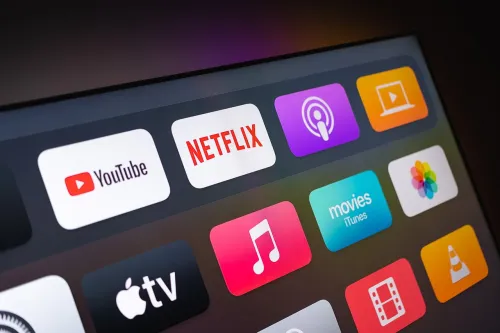
There are other examples of the freemium model, including Spotify, one of the most widely used music streaming apps in the world. Spotify can be downloaded and used for free, but the cost comes in usage. With the free version, users can listen to all songs without limits, but they cannot choose which song to play. They must select an artist and start “shuffle play,” waiting for the desired song to appear. And of course, they must listen to ads, which is another way Spotify generates revenue.
If users want to avoid ads and choose songs freely, they must activate a premium (paid) subscription. The same applies to many smartphone and tablet apps, which can be downloaded and used for free up to a certain limit of features, but must be upgraded with a premium version to unlock additional functionality. From dating apps like Tinder to gardening or fitness apps, and the same applies to many video games.
