




How to create effective mind maps with artificial intelligence
Today, information is constantly multiplying, so it is essential to organize ideas clearly. Mind maps have become an indispensable tool for students, professionals, and entrepreneurs, as they allow concepts, relationships, and processes to be visualized in a graphical and understandable way. This organizational technique is enhanced with the help of AI, enabling the automatic generation of ideas, the structuring of complex information, and improved productivity.
Mind maps: what they are and the benefits of using them
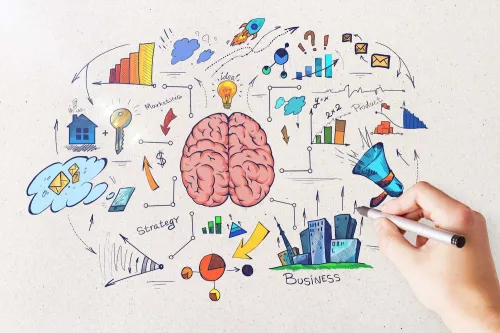
People often wonder what mind maps are. In general terms, they can be defined as a graphical representation of ideas that starts from a central concept and branches into subtopics and details. Each branch can contain keywords, images, colors, or icons that facilitate understanding and memorization.
The benefits of mind maps are numerous and become even greater with artificial intelligence.
- Organization of complex ideas: AI can analyze long texts and automatically generate clear hierarchical structures.
- Improved learning and memory: visual maps make it easier to retain information and help identify relationships that might otherwise go unnoticed.
- Boosting creativity: AI can suggest new connections or subtopics, helping generate original ideas during brainstorming.
- Efficient project planning: from task assignment to deadline tracking, mind maps can be integrated with project management systems.
- Clear and effective communication: conveying complex information to teams or clients becomes easier thanks to structured visualization.
The use of mind maps also improves individual and collective productivity, allowing teams to collaborate in real time and share ideas in an organized way.
Main AI tools for creating mind maps
Technology has transformed mind maps into intelligent tools capable of automatically generating, organizing, and optimizing content. Choosing the right one depends on the objective and the type of user.
- MindMeister: an ideal tool for collaborative teams and professionals seeking simplicity and real-time work. Its main features include online collaboration, integration with productivity applications, and AI-powered idea generation. However, it offers fewer advanced visual creativity options compared to solutions like Ayoa or XMind AI.
- XMind AI: perfect for users handling large volumes of information who need to organize complex ideas hierarchically. It can generate maps from long texts, automatically reorganize nodes, and create professional templates. Its main limitations include a highly technical interface and less fluid online collaboration than MindMeister. It is recommended for researchers, university students, or professionals analyzing complex data who need advanced structuring.
- Miro: its ideal user profile includes teams that need a flexible space for all types of diagrams, not just mind maps. Its easy integration with other tools (such as Trello and Slack) is especially valuable. However, it is less intuitive for users who only need simple mind maps and has a steep initial learning curve. It is best suited for large corporate teams, consultants, and projects combining mind maps with other visual planning methodologies.
- Ayoa: designed for creative users and professionals seeking dynamic mind maps with a focus on innovation and productivity. It allows AI-assisted brainstorming, different map styles (radial, hierarchical, list), task tracking, and prioritization. However, some advanced features require a paid plan. It is recommended for creative agencies, startups, and marketing teams that want to explore ideas visually and dynamically.
- Coggle AI: often chosen by users who want to quickly generate mind maps from text or initial ideas. Its advantages include automatic branching and real-time collaboration. However, it offers fewer integrations and limited advanced features. It is recommended for students, professionals needing quick summaries, or executive project outlines.
Although each tool works differently, they share common steps to take full advantage of their capabilities.
- Define the central topic: identify the main concept that will serve as the central node. For example, a digital marketing plan.
- Gather information: collect texts, ideas, notes, or relevant data you want to organize.
- Choose the AI tool: depending on the user profile and needs.
- Generate automatic branches: use AI functions to suggest subtopics and relationships between ideas.
- Customize visually: apply colors, icons, labels, and hierarchies to improve readability and memorization.
- Review and adjust: AI suggests connections, but the human touch is essential to prioritize and contextualize.
- Collaborate and share: invite the team to add comments, new ideas, or modifications.
- Export and apply: turn the mind map into presentations, action plans, or project reports.
AI mind maps: examples and practical uses
The integration of AI into mind maps has a wide range of applications.
- Education: students can summarize entire subjects, connect concepts, and prepare for exams visually.
- Project management: corporate teams can organize tasks, define priorities, and link strategic goals to concrete actions.
- Creativity and brainstorming: AI suggests connections between seemingly unrelated ideas, generating innovative solutions.
- Research and analysis: researchers can organize information from multiple sources, identifying key patterns or trends.
A mind map example could be organizing a corporate event: the central node would be “Annual company event,” with branches including logistics, marketing, guests, speakers, and budget. AI can automatically suggest sub-branches such as “potential sponsors” or “conference topics,” optimizing planning and reducing errors.
The ability of AI to analyze large volumes of information and propose coherent structures turns mind maps into strategic tools for any professional or student. For those who want to deepen the combination of technology and strategic information organization, the Master in Artificial Intelligence & Machine Learning for Business is an option that teaches how to fully leverage AI innovations in the professional environment.
