
Sports tourism: an opportunity to manage sporting events and activities
Watching a live football match or a Wimbledon final, running the New York Marathon, attending a yoga class… Sports tourism is a growing market segment that generates millions in revenue, offering countless opportunities for companies and professionals specialized in this sector.
Recent forecasts indicate that sports tourism will reach a market volume of 1.8 trillion dollars by 2030, an astonishing figure that aligns with the growth this activity has experienced over the past decade. More and more people are choosing to plan their trips around sports activities or events, which increases demand for specialized professionals and companies dedicated to managing these types of initiatives.
Therefore, it is essential to define what sports tourism is, what business opportunities it currently offers, and how these are being implemented in different markets, with well-positioned destinations in this field.
What is sports tourism?
What is meant by sports tourism? What type of tourism can be included in this category? It can be defined as any trip undertaken with the aim of directly or indirectly engaging in a sports activity. It is best understood through examples:
- Travel to Australia to attend the Tennis Open.
- A trip to New York to take part in the famous marathon held every November.
- A weekend getaway to attend a course or seminar specializing in yoga, pilates, or another sport discipline.
- Visits to historic cities due to their connection with sporting milestones, or to see some of the most impressive sports facilities, such as Wembley Stadium in the United Kingdom or Camp Nou in Spain.
Growth opportunities in sports tourism
The opportunities offered by sports tourism for both companies and professionals are numerous. This sector ranges from passive to active activities, as mentioned above. What kind of opportunities are we talking about? What types of sports-related travel have future potential?
Active sports tourism
This category includes people who travel to actively participate in sports. That is, those who travel to attend training courses in a specific discipline or retreats focused on pilates, yoga, karate, among others. What kinds of businesses can arise from these needs and demands?
- A company specialized in training workshops for indoor cycling, zumba, and other disciplines.
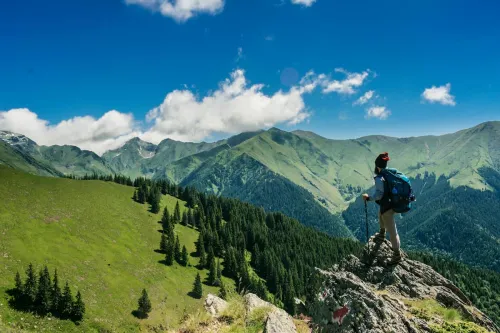
- An agency specializing in organizing weekend retreats that combine rest and sport: hiking, trekking, yoga, pilates…
- Organizations that promote trips to participate in major events, from the New York Marathon (usually held on the first weekend of November) to events in Spain such as the 101 km of Ronda. Running is one of the disciplines that has most boosted sports tourism, with iconic races in London, Boston, and Berlin.
Passive sports tourism
This type of tourism focuses on attending sports events, both professional and amateur. Trips to attend football World Cups, the Olympic Games, elite tennis competitions, or events such as the Super Bowl, which goes beyond purely sport. What kinds of businesses are generated around these major events?
- Travel agencies that organize attendance at these events.
- Ticket sales.
- Merchandising.
How sports and tourism drive new experiences
In addition to active and passive sports tourism, in recent years a new trend has emerged, highlighting the importance of continuing to invest in innovation and creativity when it seems like everything has already been invented: nostalgic sports tourism. This trend invites users to relive major milestones in sports history through temporary exhibitions, museums dedicated to a specific team or elite athlete, and has been very well received.
Undoubtedly, interest in football has led to the creation of specific itineraries, museums, routes, and even themed restaurants for fans of certain teams.
To make the most of these opportunities, specialized training is essential. In this regard, EAE Business School Barcelona offers the Master in Sports Management, a program focused on sports tourism that opens many career opportunities. They also offer the Master in Sustainable Tourism Management of Resources and Destinations, which provides tools for those who want to develop projects in the tourism sector, including the sports segment.
Top sports tourism activities
At this point, it is interesting to highlight some of the activities related to sports tourism that are being very well received by the public. The focus is on active participation in events or attending them as spectators. In both cases, they generate employment and economic value in destination areas.
- Organizing themed routes around an elite athlete or a specific team: visits to their birthplace, specialized museums if available, high-performance facilities, related merchandising, among others.
- Organizing getaways to improve a specific sport, both for leisure participants and professionals seeking to enhance their skills.
- Planning participation in public sports events, such as the aforementioned marathons or gatherings of surfing, yoga, or pilates enthusiasts.
Sports tourism is booming and requires experts in the field to develop business ideas. For professionals, it creates interesting job opportunities where training is key.
Related Programs

Master in Sports Management
Business ManagementTrain with EAE Barcelona in Sports Management to accelerate your professional transformation
- Multiples modalities
- October 2026
