




Why does cross-docking improve logistics efficiency?
Cross-docking has emerged as a key logistics technique for companies seeking to optimize their operations and improve distribution efficiency. This process, which involves the direct transfer of goods between vehicles without intermediate storage, helps reduce time and costs. In this article, we explore how cross-docking improves logistics efficiency, the different types that exist, and the benefits it brings to companies.
What is cross-docking and how does it work?
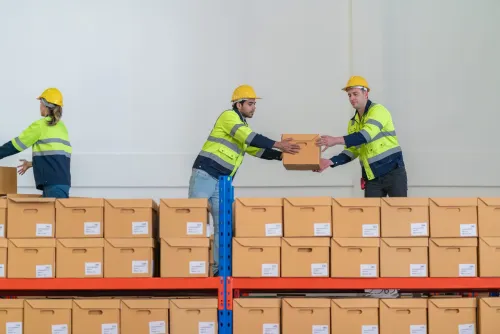
Cross-docking is a logistics process that involves the direct transfer of products from one transport vehicle to another, without storing them in a distribution center. Instead of placing products into inventory, they are unloaded, briefly sorted, and then reloaded onto outbound vehicles for delivery to their final destination. This strategy significantly reduces the time products spend in warehouses, enabling a faster and more efficient flow of goods.
It can be especially useful in situations where fast deliveries are required or where products must be sent to different destinations from a single origin point. For this process to be successful, efficient coordination between suppliers, logistics operators, and carriers is essential.
Types of cross-docking in warehouse logistics
There are different types of cross-docking depending on the needs and complexity of logistics operations. The most common include:
- Pre-distribution cross-docking: products arrive at the logistics center already labeled and sorted according to their final destination. They only need to be transferred to outbound vehicles without further handling.
- Consolidation cross-docking: products are not pre-sorted upon arrival at the distribution center. They are organized according to orders and grouped for shipment to a single destination, which is useful when products come from different suppliers.
- Hybrid cross-docking: a combination of the previous two methods. Some products are distributed directly, while others may be temporarily stored before being shipped to their final destination.
- Continuous flow cross-docking: products arrive at the logistics center in large quantities and are continuously distributed without being stored.
Advantages and challenges of cross-docking
This technique offers several advantages for companies seeking to improve the efficiency of their logistics operations:
Advantages:
- Reduced storage costs: by avoiding long-term storage, companies can significantly reduce warehousing and inventory management expenses.
- Faster delivery times: reducing the time products spend in warehouses results in quicker deliveries, leading to higher customer satisfaction, especially in e-commerce.
- Greater operational efficiency: this approach simplifies the supply chain and improves responsiveness to demand fluctuations.
- Reduced goods handling: eliminating storage reduces product handling, decreasing the risk of damage and improving service quality.
- Optimized warehouse space: cross-docking allows warehouse space to be used more efficiently, as products are not stored for long periods.
Challenges:
- Requires precise coordination: effective implementation depends on smooth coordination between suppliers, carriers, and logistics operators, which can be challenging in complex operations.
- Initial infrastructure investment: distribution centers must be specifically designed for this process, which may require significant upfront investment.
- Not suitable for all product types: products requiring long-term storage or special handling may not be suitable for cross-docking.
Successful cross-docking cases in logistics
Cross-docking has proven successful in various industries, especially those requiring speed and efficiency in product delivery. Some notable examples include:
- Retail: large supermarket chains use cross-docking to quickly distribute fresh products, ensuring they reach stores as quickly as possible without long storage times.
- Automotive: in the automotive industry, parts are shipped directly from suppliers to assembly plants without passing through intermediate warehouses, reducing waiting times and costs.
- E-commerce: logistics companies serving online stores use cross-docking to speed up deliveries and meet the demand for fast shipping in a highly competitive environment.
By integrating this method into their operations, companies not only reduce operational costs but also significantly improve customer satisfaction by offering faster delivery times.
Ultimately, through precise coordination and the use of appropriate technologies, companies can reduce costs, improve delivery times, and deliver a more efficient service to their customers.
For those looking to deepen their knowledge in this field, specialized programs such as the Master’s in Supply Chain Management & Logistics can provide the knowledge and tools needed to excel in the logistics and supply chain industry.
