



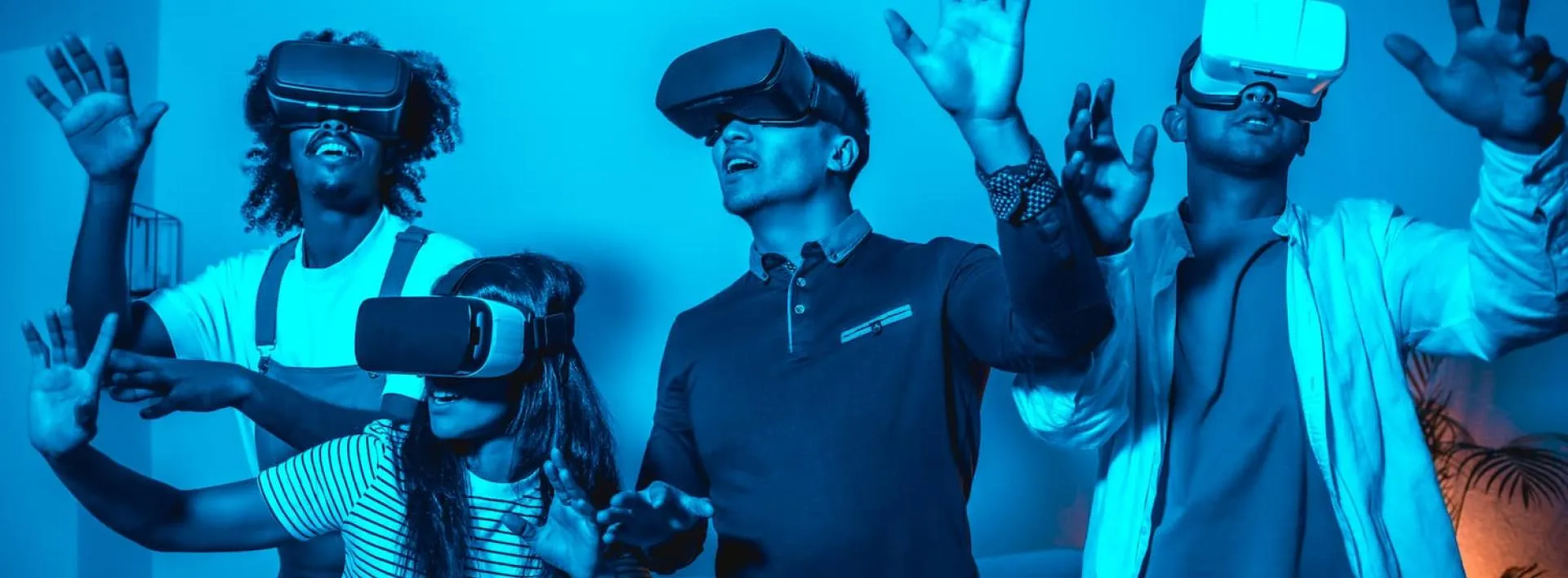
Immersive experiences: the new trend in event planning
It is one of the most effective trends for capturing users’ attention and immersing them in a journey that lets them experience the customer journey before making a purchase or saying ‘yes’ to a brand. Immersive experiences are increasingly common in sectors such as event planning, where creativity and interaction play a key role. To understand how to integrate these experiences professionally, programs such as a Master’s in Event Management and Organization provide the necessary training to design and manage events that deeply impact participants.
At the beginning of 2024, ‘Mundo Pixar’ arrived in Madrid, an exhibition that allowed users to explore the main films created by Pixar, a perfect example of an immersive experience. Visitors felt as if they were inside the fictional worlds, both through set design, recreated environments, and music, as well as the possibility of interacting with robotic characters. It was a critical and public success and perfectly defines what these initiatives are about and how much they can add to businesses and strengthen brand image.
To better understand these initiatives, the following explains what they are, how they generate memories in audiences, strengthen the bond with the brand, and increase engagement, a key factor in the social media era and the fight for consumer attention.
What are immersive experiences?
This term refers to initiatives whose goal is to immerse users in a physical or virtual environment that engages them, either by allowing them to actively participate or by making them observers of a reality that could otherwise seem completely fantastic or distant. To achieve this, significant resources are required, such as:
- Advanced technologies
- Interactive narratives
- Specialized professionals to carry out this strategy
Immersive technology: the future of digital interaction
Given its importance in recreating these experiences, it is essential to consider which programs, applications, and hardware resources are available:
- Virtual reality (VR): equipment such as VR headsets, tracking systems, and motion controllers, among others.
- Augmented reality (AR): smart glasses, specific software, and mobile devices such as smartphones or tablets.
- Mixed reality (MR): special headsets and spatial mapping systems.
- Visualization technologies: high-resolution OLED and LCD screens and 360-degree projectors for domes, theaters, and specially designed spaces.
- Interaction and control: motion sensors or gloves equipped with special fibers that can generate a sense of touch for users interacting with virtual objects.
- Immersive sound: a key factor, requiring surround sound, 3D audio, or noise-canceling headphones. These must be used in fully isolated environments.
- Artificial intelligence (AI) and machine learning: AI is essential due to its ability to personalize experiences at all levels.
- Platforms and software: specific programs, software, and simulation technologies are required to establish the foundations of these immersive experiences.
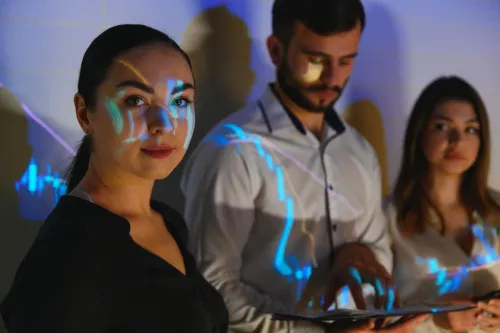
An immersive experience: How is it created and what does it offer users?
Immersive experiences are created through advanced technology. The resources mentioned above form the foundation of these systems. The main technologies used are virtual reality (VR), augmented reality (AR), and the devices required to complete the experience.
Behind immersive experiences lies extensive teamwork combining artistic design, programming, and specialized technology. Designers create 3D environments that allow users to interact in various ways, while programmers develop interfaces and mechanics to enable those interactions and connections.
Regarding what these experiences offer users, several key aspects stand out:
- Ability to quickly generate a connection with the user
- Enables direct interaction between sender (company) and brand with the recipient
- Increases information retention, making messages more memorable
- Better positioning of the company compared to competitors
Immersive events: new ways to engage your audience
The best way to understand the potential of these initiatives is through real-world examples of companies that have embraced immersive events. Alongside Pixar, other examples include IKEA, which has fully leveraged these “rules of the game.”
IKEA and augmented reality
The global furniture and home goods company offers an augmented reality app, IKEA Place, which allows customers to preview how products would look in their homes. Users can select items from the catalog and view them in their space using a smartphone or tablet camera.
Audi and virtual reality in the automotive industry
Another recent example is Audi, where customers can access different car options through a VR solution. They can change colors, materials, features, and even partially experience the driving sensation.
Walmart and VR for human resources
Another interesting application in the business world is Walmart, which developed a series of VR devices so employees could train for high-demand situations, such as Black Friday or Christmas peak periods.
As we can see, new technologies offer multiple opportunities to create immersive experiences that add value to companies, both for customers and internal teams. This growth has driven demand for professionals capable of developing immersive experiences in specialized agencies.
