



How to choose the right distribution channel in companies
Once you have products ready for commercialization, how do you get them to the customer? Speed, efficiency, commitment… There are many important aspects to consider when choosing the most suitable distribution channel for a business. Below we outline the key points to make the right decision.
Distribution channels are often the great forgotten element. Rather than forgotten, it could be said that not all companies are aware that this final stage is essential for a satisfying customer experience—something that can encourage repeat purchases and even build loyalty. For this reason, we explain here how to choose the most suitable distribution channel for a business, validated by the Logistics Director.
What are distribution channels?
The question is straightforward. For those outside the industry: what are distribution channels? These are the routes through which a product reaches the final customer, and it is important to define them from the beginning, since the type of product being sold determines the appropriate distribution channel for a brand.
What do these channels revolve around?
- Sender: the selling company, manufacturer, or retailer that approaches a wholesaler to acquire goods for resale.
- Receiver: the final customer. This can be an individual or another company (Business-to-Business), as in transactions between wholesalers and retailers.
- Means used to distribute and ship products: by land, sea, air, or a mix. This depends on many factors and it is key to evaluate aspects such as delivery times and operational security.
Types of distribution channels
That last aspect—the type of distribution channel chosen—can be classified in several ways. One of them is the one mentioned above, based on the type of transport used.
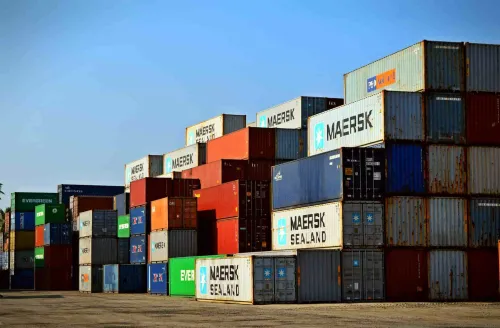
- Sea transport: large ships carrying containers with goods, typically used for imports/exports.
- Land transport: trucks that cross countries and even the European continent to deliver goods to their destination.
- Air transport: planes dedicated to transporting and distributing products.
Another commonly used classification of distribution channel types is the following:
- Direct: when the selling company is fully responsible for ensuring the product reaches the end customer, without intermediaries. An example is Apple, which sells through its online store and physical retail locations and manages the entire process.
- Indirect: the company relies on intermediaries to handle product distribution. This is recommended for brands seeking presence in multiple markets and/or countries. The downside is less control over the supply chain and shared profit margins.
- Hybrid: a mix between direct and indirect distribution channels. Companies may rely on intermediaries in specific situations, such as periods of high demand like Christmas, when sales increase significantly.
The world of distribution channels is highly important both in commercial companies and in the field of logistics. At EAE Barcelona, we offer a specific program, the Master in Supply Chain Management & Logistics, which focuses on the importance of managing all links in the supply chain, a key element in completing a brand’s strategy. Students acquire skills in planning, control, project organization, and management through this program.
How to choose the right distribution strategy?
Choosing the best distribution model for a company is essential. Therefore, several determining factors must be considered when selecting a distribution strategy. These include:
- Customer location: this is fundamental, as targeting a very broad and distant audience can significantly increase the final price due to shipping costs, so this factor must be carefully considered.
- Order volume and frequency: sales volume helps determine whether intermediaries should be used in the distribution chain or whether a direct channel should be developed. Volume and frequency are key factors.
- Transport costs: what transport method will be used? What is its cost? As mentioned earlier, how does this impact the final product price, and will customers be willing to pay it or abandon the purchase process?
- Warehousing resources: another key point, including location, capacity, and ease of access for distribution. This is essential when defining the preferred distribution strategy.
Examples of distribution channels
What real-world cases can help readers better understand what distribution channels are and how the different types mentioned above work? There are many companies that have adopted different approaches.
APPLE
The smartphone, computer, and technology manufacturer is a perfect example. Apple has its own distribution channels, both physical retail stores—where branding and brand image are strongly reinforced—and online via its e-commerce platform. It also uses intermediaries, being present in third-party retail stores and large commercial chains where its products are sold.
INDITEX
The Spanish fashion giant is another interesting case. It uses its own increasingly optimized distribution channels: high-street stores, shopping malls, and an online store that complements physical locations. Customers often pick up online orders in-store and make returns, which frequently leads to additional in-store purchases.
ONCE
ONCE is another interesting example. It sells through lottery offices, partner sales points, and even a network of authorized sellers who distribute its gaming products widely, achieving broad coverage of its potential audience.
