




Effective Strategies for Risk Management in Projects
Anticipating anything that could become an obstacle to a project before it even starts. This is how risk management can be defined, a strategy focused on providing proactive rather than reactive tools. More details below.
Anticipating potential situations that may arise in order to know how to respond, prevent issues, and ensure the success of an initiative. These are just some key aspects of project risk management, an effective and efficient strategy for companies and organizations to keep projects moving forward.
What is project risk management?
The first important question to answer is: what exactly does risk management in projects involve? It can be summarized in several key points that make this strategy highly valuable for companies and organizations across any industry:
- A process through which risks that could affect the success of an initiative are identified, assessed, and prioritized.
- The work includes planning and implementing actions to minimize, monitor, and control risks and their negative impact.
It is important to consider that these risks can be both internal and external, and they may arise at different stages of the project lifecycle. For this reason, having a well-defined strategy to address them efficiently is essential. The main objective is to achieve success within the established timeline and budget, while meeting stakeholder expectations. Proper risk management not only prevents problems, but also creates opportunities to improve project performance.
Risk management in projects
This strategy involves carrying out a series of practices to determine potential project risks and how they can be addressed or avoided. These objectives are structured in the following phases:
- Risk identification: identifying situations that could affect ongoing or planned work. This step includes brainstorming sessions, interviews, reviewing previous documents, and using techniques such as SWOT analysis (Strengths, Weaknesses, Opportunities, Threats).
- Risk assessment: Once risks are identified, they must be analyzed to determine their impact and likelihood. Common tools include probability and impact matrices, as well as cause and effect diagrams.
- Response planning: developing strategies to mitigate, transfer, accept, or avoid identified risks. Depending on each case, actions may be preventive or corrective.
- Risk monitoring and control: Throughout the project, these critical points must be continuously monitored to ensure response strategies are effective. If new risks arise or existing ones change, responses must be adapted.
- Risk closure: at the end of the project, risks are reviewed to assess how they were managed, and lessons learned are documented for future initiatives.
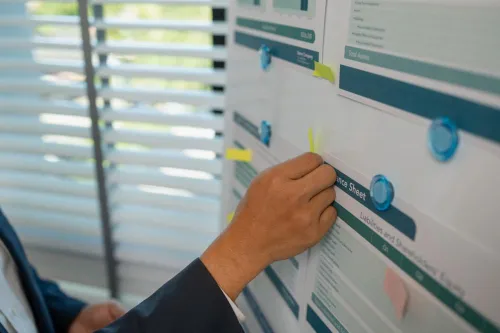
Foundations of project risk management
To implement effective risk management in projects, certain foundational elements must be in place. What are the key pillars?
- Risk oriented organizational culture: the company should promote a culture that values the proactive identification and management of potential risks. Team members should be trained to recognize them and understand their potential impact.
- Structured methodology: having a framework that guides the entire process, from identification to closure, is essential. Approaches such as PMI or ISO 31000 are widely used and highly effective.
- Tools and technologies: Using project management software can simplify data collection, tracking, and analysis. Predictive analytics and historical data also help improve assessment accuracy.
- Effective communication: clear and constant communication among all stakeholders is crucial. Keeping everyone informed about risks and decisions ensures better coordination.
- Continuous planning and review: since projects evolve, risk management must be continuously updated. Strategies should be reviewed regularly and adjusted as needed.
Examples of risk management in projects
There are many real-world examples of how risk management can be applied. Here are a few cases that show its value:
Building construction
These projects may be affected by delays due to weather, supplier issues, or workplace accidents. To reduce these risks, strategies may include selecting reliable suppliers, using technology to forecast weather conditions, and providing safety training for workers.
Software development
One of the most common challenges is changing client requirements or unexpected errors during testing. Teams can address these risks by adopting agile methodologies and carrying out continuous testing throughout the project.
Marketing projects
In communication campaigns, risks may include low product acceptance or changes in consumer behavior. These can be mitigated through prior market research and real-time trend monitoring.
As shown throughout this article, risk management is essential to ensure projects are delivered as planned. Professionals in this field need the right knowledge and skills to face these challenges. Programs such as the Master in Project Management or the Master in Supply Chain and Logistics Management, offered by EAE Business School Barcelona, provide the tools needed to lead these strategies effectively.

